How DSA Biobank Supports Down Syndrome Research
The DSA Biobank provides researchers with access to biospecimens collected from individuals with Down syndrome and their family members.
These biospecimens support scientific investigations into the genetic basis of Down syndrome, associated health conditions, biomarker discovery, and therapeutic development.
By providing structured access to samples, the DSA Biobank helps accelerate research into underlying biological and genetic mechanisms that impact individuals with Down syndrome.
Who benefits from the use of DSA Biobank samples?
Researchers, clinicians, and individuals with Down syndrome all benefit through improved understanding, new interventions, and expanded treatment options.
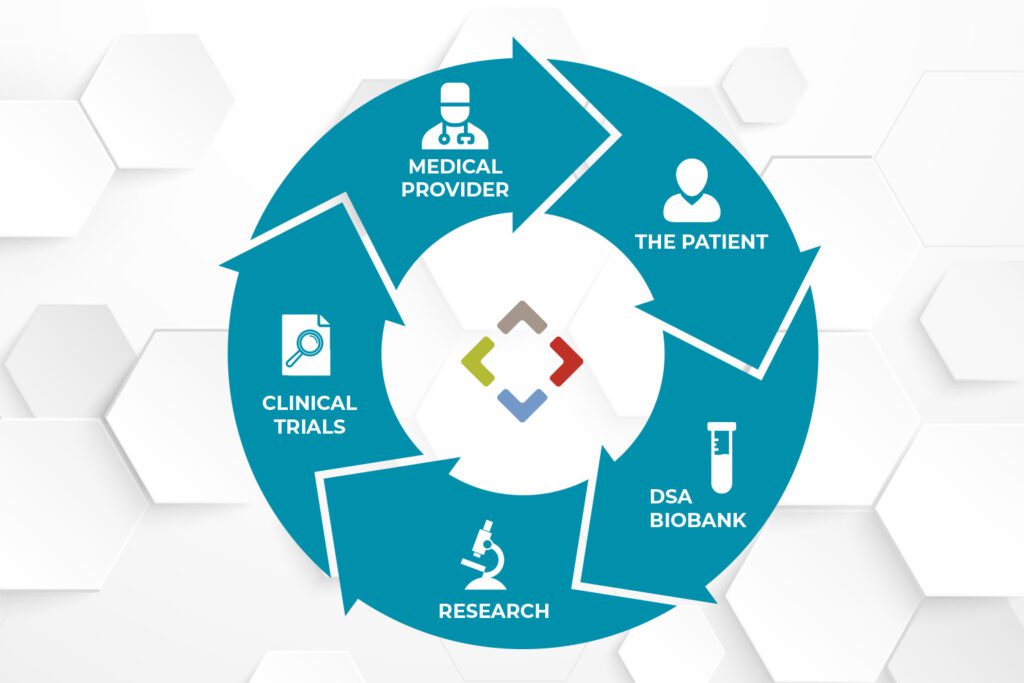
A biobank can play an important role in clinical trials and intervention studies by providing access to samples without the need for independent recruitment.
The DSA Biobank is designed to be a practical resource, providing access to high-quality samples to support study design, execution, and translation into clinical practice.
What is Biobanking?
Biobanking refers to the collection, processing, storage, and cataloging of biological samples for use in research.
A type of repository that stores various types of samples
Animal, plan, and human
A place where samples are collected, processed, stored, and catalogued
Animal, plan, and human
Biobanks are emerging sources
Independent collection->Population based
Simple->Complex
What types of samples are stored in a biobank?
A range of sample types can be stored in a biobank. At DSA Biobank, this primarily includes blood-derived samples such as serum, plasma, and DNA.
Additional biospecimens may be supported through custom cohort recruitment depending on study needs.
Why is biobanking important for Down syndrome?
Access to Down syndrome-specific biospecimens remains limited, creating barriers for researchers.
DownSyndrome Achieves aims to reduce these barriers by building and maintaining a dedicated biobank focused on individuals with Down syndrome and their families.
Without access to biospecimens, research timelines are often delayed due to the need for independent recruitment.
The DSA Biobank helps researchers save time by providing immediate access to samples and reducing the need for individual study recruitment.
Have additional questions?
Visit our Researcher FAQ page or contact us to discuss your study.